RAMSES EYES FRANKENSTEIN'S LAST BREATH
2013
Steel, plaster, snow machine, onions, dollar store objects, audio
213 x 487 x 549 cm
Collaboration with Brock Enright
2013
Steel, plaster, snow machine, onions, dollar store objects, audio
213 x 487 x 549 cm
Collaboration with Brock Enright
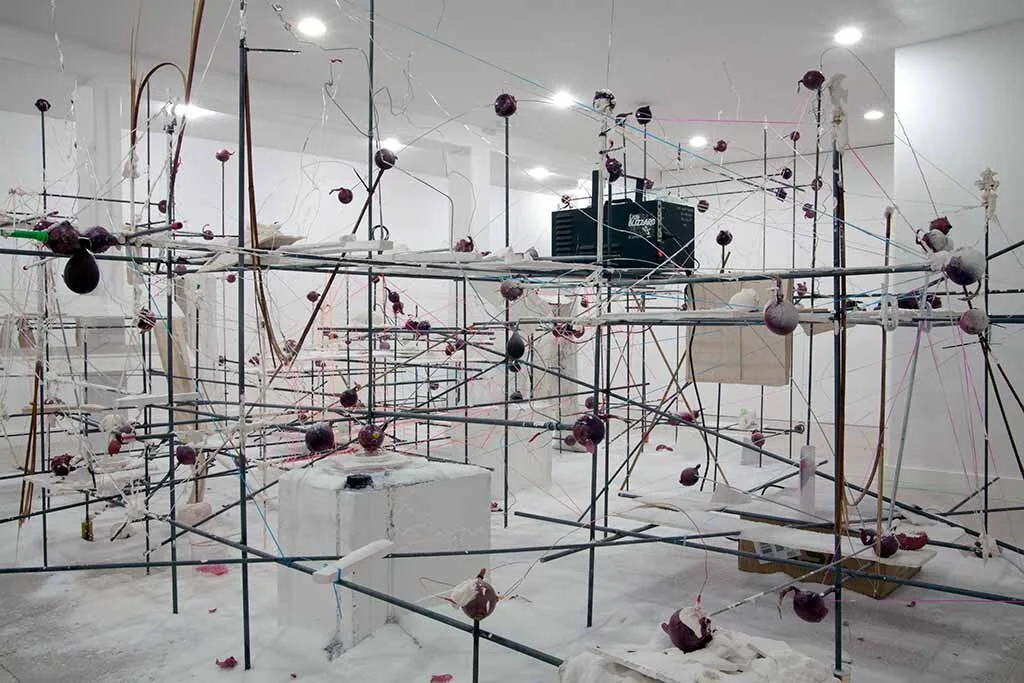
Ramses’ Eyes, Frankenstein’s Last Breath is a collaborative installation by Brock Enright and Richard Nik Evans, born from humorous conversations about materials, structures, and emotion. These discussions included a literal image-based game, similar to snap, in which selected images “competed” until the onion emerged as an inescapable, enigmatic symbol. Combined with steel and snow—materials both theatrical and symbolic—the onion became the seed of the work.
For over 5,000 years, onions have carried strange, dark, and romantic associations: cultivated for food, ritual, and worship. In ancient Egypt, they were placed in the eye sockets of mummified kings, including Ramses IV; some Native Indian cultures used them in toys. Today, the internet even claims they can power an iPhone. These layers of myth, ritual, and absurdity became the starting point for the installation.
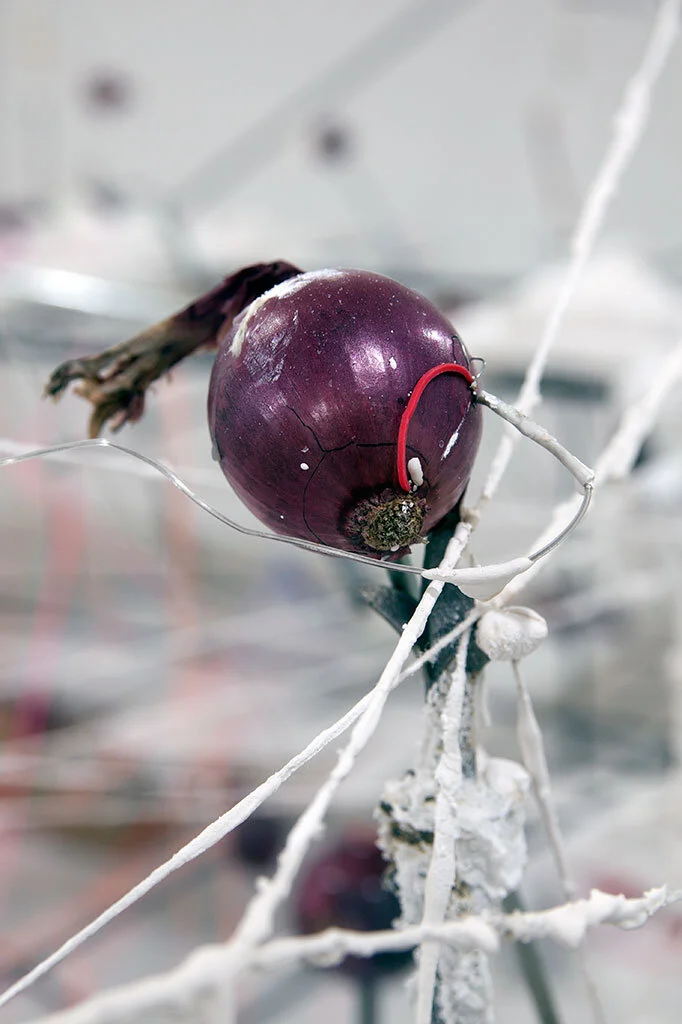
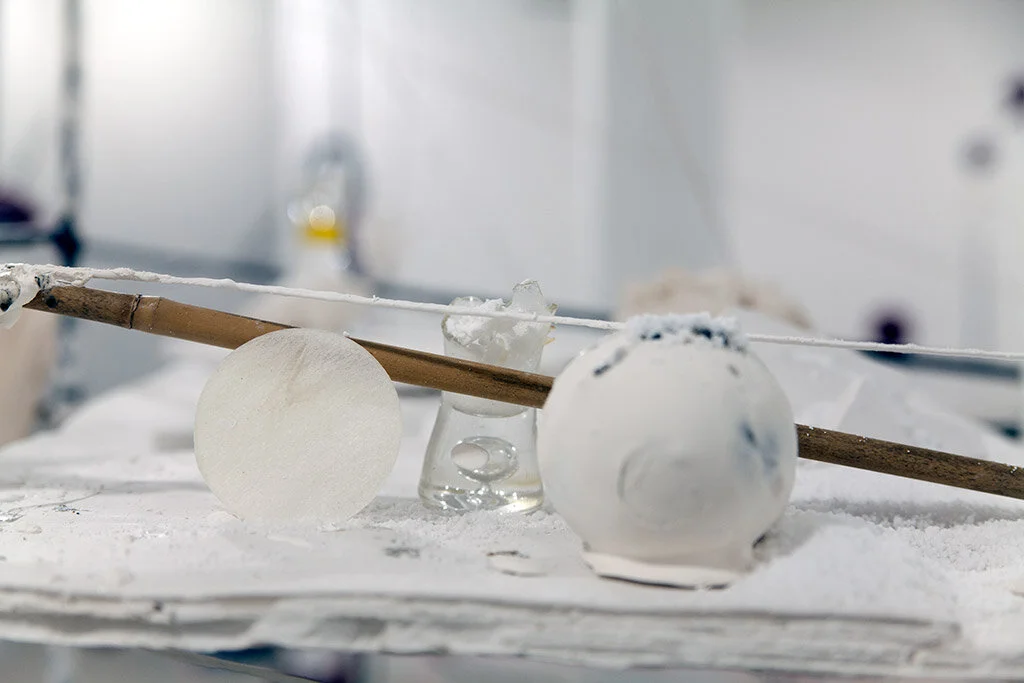
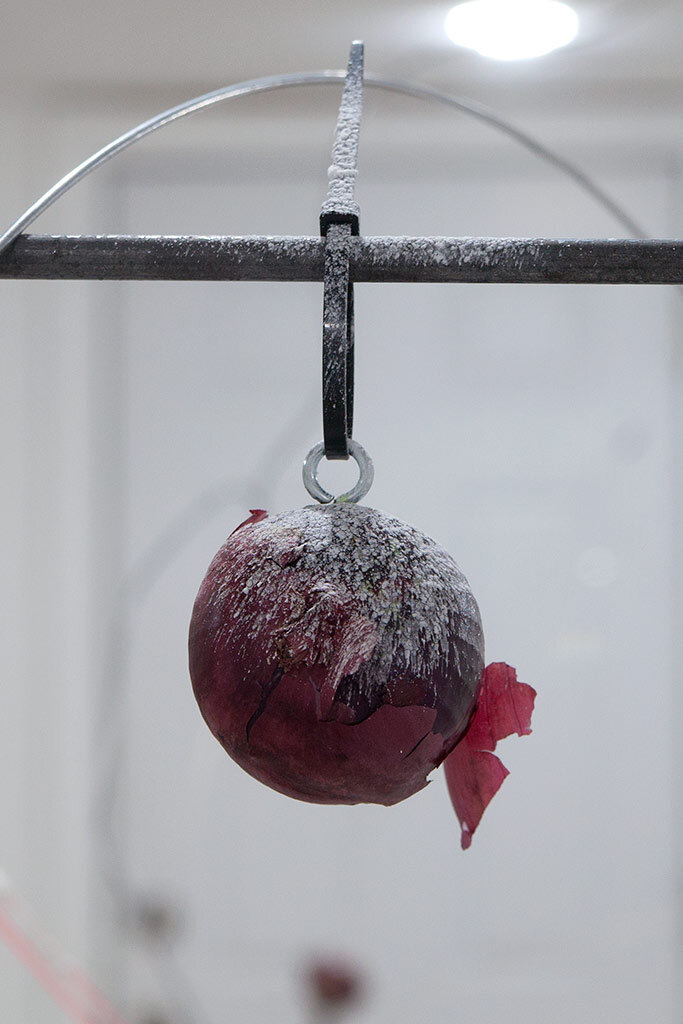
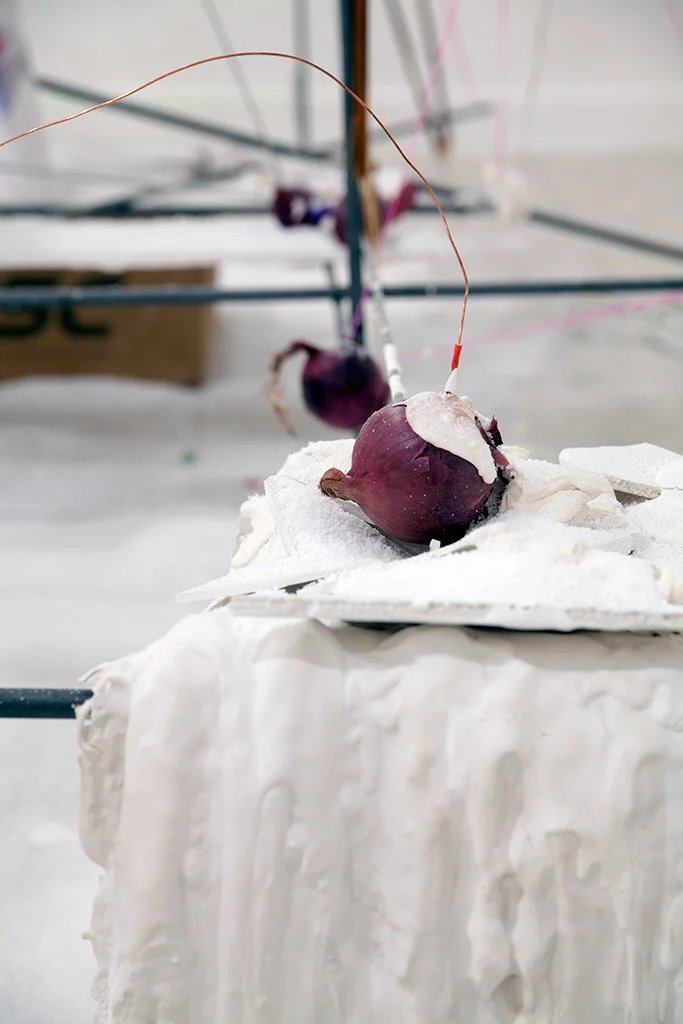
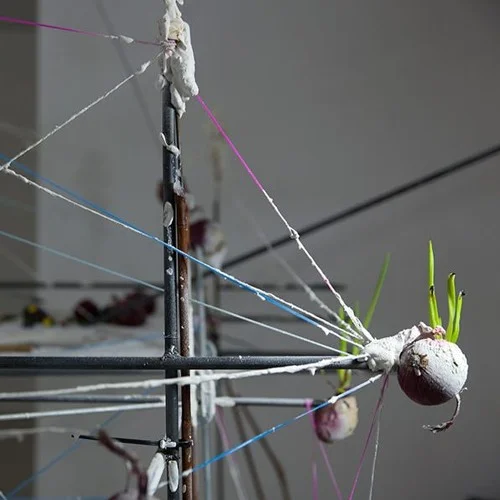
In the gallery, onions and found disposable objects from a Bushwick dollar shop are mounted on a steel structure that acts as conduit, barrier, and stage. The rods appear to carry electrical currents, teasing the impossible idea that onions could power two snow machines. Plaster shelves and rubber molds form the “skin” of the work. Together, rods, shelves, and skins create an illogical cataloging system: a crypt or laboratory built by a rebel scientist in search of a metaphor—an early, awe-inspiring technological system, theoretically powered by onions. Of course, the onions do not actually generate electricity, and it is precisely this impossibility that underscores the work’s reflection on life-giving properties, belief, and the symbolic power of art.
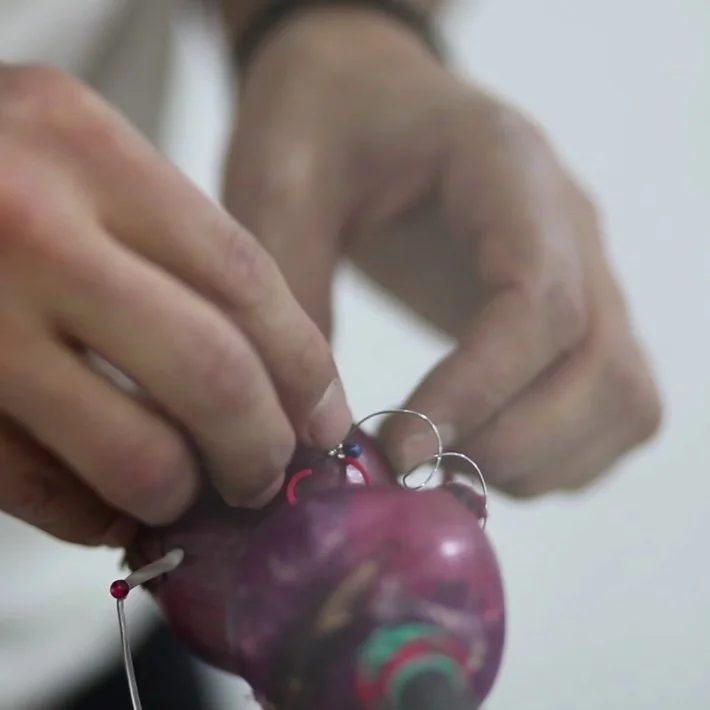
Thread, beads, rubber tubes, string, pins, and wire interact with pierced, crushed, sewn, hung, and liquidized onions beneath a falling snowstorm. Left to decay, both literally and pungently, the installation becomes a grotto-like experience: a place where nature, play, commerce, and myth collide, and where the artificial circuits of human invention are gradually overtaken by the inexorable forces of putrefaction.
Ramses’ Eyes, Frankenstein’s Last Breath investigates sculptural limits, historical myths, and mortality bound in theatrical tricks, provoking tears both literally and figuratively: through pungent onions and sentimental snow. It is a study of the improbable, a reflection on the limits of creation, a meditation on belief, and a small, strange rebellion against the predictable.